
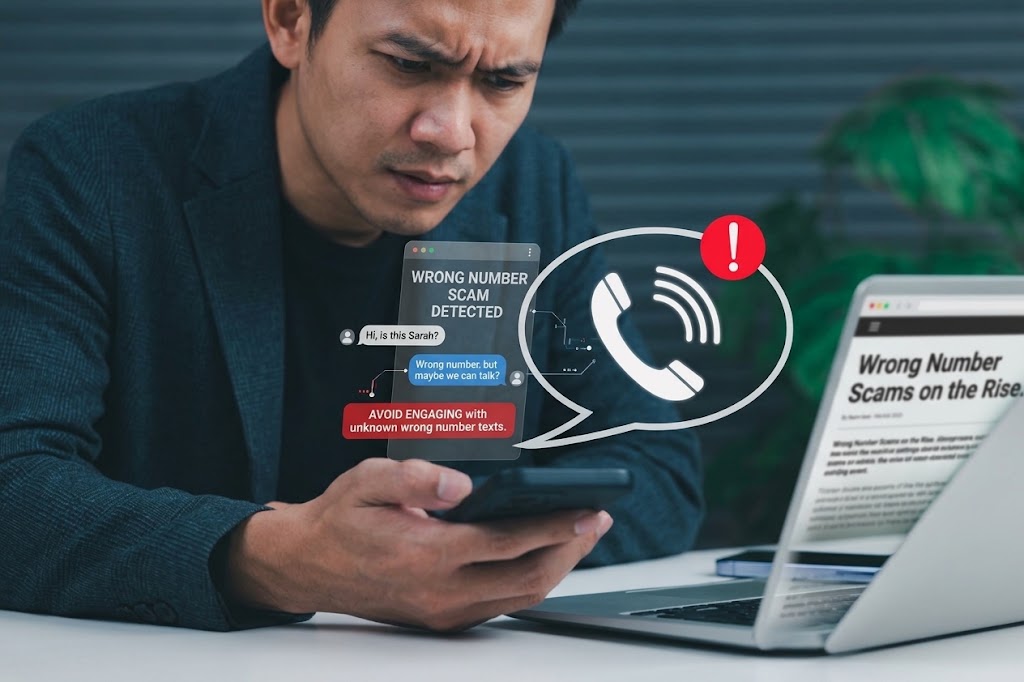
A wrong number text scam starts with a message that appears to have reached you by mistake. The sender might use a first name, mention dinner plans, or simply say “hey.” Although the message seems harmless, the goal may be to find out whether a real person uses your phone number.
According to AARP’s guide to wrong number text scams, even a short reply can confirm that your number is active. Once you respond, the sender may continue the conversation or attempt to draw you into a longer scam. That is why ignoring unexpected messages from strangers is safer than correcting the supposed mistake.
How a Wrong Number Text Scam Develops
At first, the conversation may seem completely ordinary. The sender apologises, asks a casual question, and keeps chatting. Sometimes, the messages continue for days or weeks without any payment request or suspicious link.
This friendly approach can make a wrong number text scam difficult to recognise. The sender gradually builds trust before introducing a financial request or another risky activity.
Eventually, the conversation may take a different direction. The stranger could ask for a small loan, suggest moving to WhatsApp or Telegram, or recommend an investment platform they claim to use. Photos and voice notes may also help create a false sense of familiarity.
However, you do not need to identify the exact scam the sender intends to use. An unsolicited message from an unknown person who keeps pushing for a conversation is already a reason to remain cautious.
Common Warning Signs of a Wrong Number Text Scam
Look out for these signs when an unfamiliar number contacts you:
- An unexpected greeting: The sender claims to know you or acts as though you have spoken before.
- Repeated attempts to continue the chat: They keep asking questions even after you explain that they have the wrong number.
- A sudden change in topic: An ordinary conversation gradually turns toward money, cryptocurrency, or investments.
- Pressure to switch apps: The sender encourages you to continue chatting on another platform.
- Requests for personal information: They ask for identity documents, financial details, verification codes, or private information.
- Promises of easy profits: The person recommends a trading opportunity that supposedly offers unusually high or guaranteed returns.
One sign alone does not prove fraud. Nevertheless, several of these behaviours together should make you especially careful.
What to Do If You Already Replied to a Wrong Number Text
If you have answered a suspicious message, do not panic. A reply alone does not automatically mean that your bank account has been compromised.
Take these steps to reduce further risk.
1. Stop Responding and Block the Number
End the conversation instead of explaining yourself or asking more questions. Block the number and avoid following any links the sender provides.
Do not move the conversation to WhatsApp, Telegram, or another private messaging app simply because the stranger requests it.
2. Protect Your Personal and Financial Information
Never send a photograph of your identity document, a picture of a cheque, a bank verification code, or your account credentials to an unknown contact.
If you shared a password or verification code, contact your bank or the affected service through its official website or phone number. Change compromised passwords and secure any accounts that may be at risk.
3. Contact Your Bank If You Sent Money
If the wrong number text scam led to a payment, contact your bank or payment provider as soon as possible. Use the telephone number printed on your bank card or published on its official website.
Explain what happened and ask whether the payment can be stopped, recalled, or disputed. Keep the recipient’s details, payment confirmation, and messages as evidence. A reversal is not guaranteed, but reporting quickly may help.
4. Preserve Messages and Transaction Records
Save the original conversation, the sender’s phone number, relevant dates, and any follow-up messages. If the person directed you to a trading website or cryptocurrency wallet, preserve the transaction history before losing access to the account or platform.
Record wallet addresses and transaction IDs where applicable. A screenshot showing profits inside a suspicious website does not, by itself, prove that the money exists or can be withdrawn.
5. Report the Suspicious Messages
You can report suspected fraud through these official channels:
- ReportFraud.ftc.gov — report fraud to the US Federal Trade Commission.
- IC3.gov — report qualifying internet-related crimes to the FBI’s Internet Crime Complaint Center.
- Your mobile carrier: Contact your carrier if you receive a high volume of suspicious messages. In the United States, many carriers accept spam reports forwarded to 7726 (SPAM).
Reporting options and procedures vary by country. If you live outside the United States, use the relevant local consumer protection, cybercrime, or telecommunications reporting service.
What If the Wrong Number Text Scam Involves Cryptocurrency?
Some wrong number text scams eventually lead to fake investment opportunities. The sender may encourage you to register on a trading platform, deposit cryptocurrency, or connect a wallet to a website they recommend.
The platform might display impressive profits while preventing withdrawals or demanding additional payments. These signs warrant caution, especially if the sender pressures you to deposit more money to unlock your supposed balance.
If you transferred cryptocurrency, preserve the wallet addresses, transaction IDs, exchange records, messages, and website details. Avoid sending additional funds to pay supposed taxes, verification charges, or withdrawal fees without independently verifying the request.
You can also read our guide to Bitcoin ATM scams for information about another type of cryptocurrency-related fraud.
Can Cipher Tracing Help Review Scam Records?
If a wrong number text scam resulted in financial loss, organised records can help you understand what happened and identify information that may be useful when reporting the incident.
Cipher Tracing offers a free consultation for people who want to discuss their case and the records they have available. You can also visit our crypto recovery service page to learn about reviewing cryptocurrency transaction records.
Keep your expectations realistic. Blockchain transaction records may help trace the movement of cryptocurrency, but tracing does not guarantee that funds can be recovered. Any assessment depends on the available evidence and the circumstances of the case.
Be particularly careful if someone contacts you unexpectedly and claims they can recover your money for an upfront fee. Never share your wallet seed phrase, private keys, passwords, or remote-access credentials with someone offering recovery assistance.
How to Avoid Wrong Number Text Scams
A few simple habits can reduce your exposure to suspicious messages:
- Ignore unexpected texts from unknown numbers instead of confirming that your number is active.
- Avoid clicking links or opening unexpected attachments.
- Never share verification codes, passwords, or sensitive financial information with strangers.
- Be cautious when an unfamiliar contact introduces investment opportunities or requests money.
- Verify any financial claim independently using official contact details.
- Block suspicious senders and report repeated spam or phishing attempts.
- Preserve evidence immediately if a conversation leads to financial loss.
Most importantly, do not allow politeness or curiosity to override your judgement. You do not owe an unknown sender a reply, even if their message appears to be a genuine mistake.
Final Thoughts on Wrong Number Text Scams
A wrong number text scam may begin with an innocent greeting, but some versions develop into investment fraud, impersonation, or requests for money. The sender’s friendly tone should not be treated as proof of identity or good intentions.
Ignore unexpected messages, protect your personal information, and stop communicating when a stranger introduces suspicious financial requests. If you have already lost money, contact the relevant financial provider, preserve your evidence, and report the incident through appropriate official channels.
If cryptocurrency was involved, transaction records may help clarify where the funds went, although recovery is never guaranteed. Taking prompt, careful action can help limit further exposure and support any subsequent investigation.
