
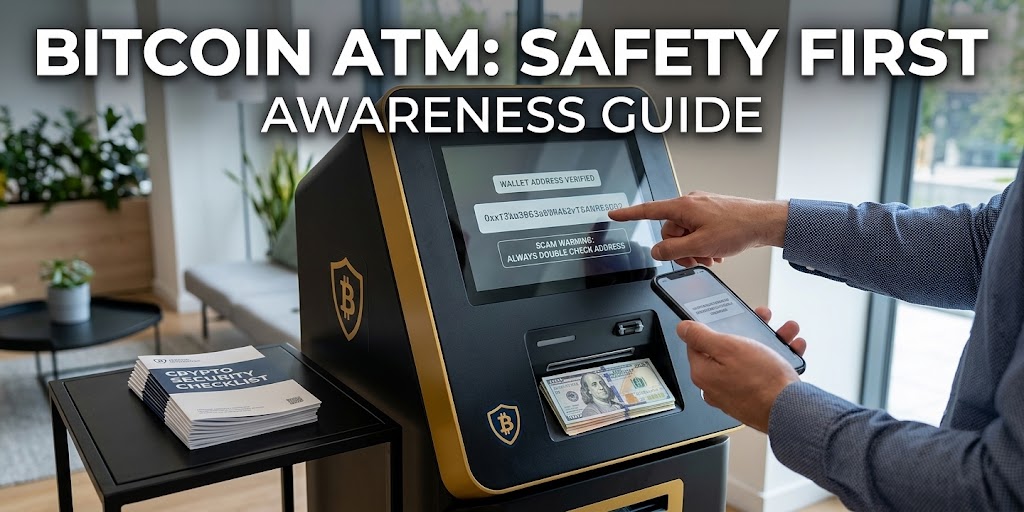
A Bitcoin ATM scam tricks people into using a cryptocurrency kiosk to send money to a scammer. The machine itself may be legitimate, but the payment instructions are fraudulent. Scammers often impersonate government officials, bank employees, technical support agents, or romantic partners to convince victims to deposit cash and transfer Bitcoin to a wallet they do not control.
These scams can cause serious financial losses because cryptocurrency transactions are generally irreversible. However, knowing the warning signs can help you stop a suspicious payment before it is too late.
If you have already used a Bitcoin ATM and suspect fraud, this guide explains what to look for, which evidence to preserve, and how to report the incident.
What Is a Bitcoin ATM Scam?
A Bitcoin ATM, also called a cryptocurrency kiosk, allows users to exchange cash for cryptocurrency. Depending on the machine, users may also be able to sell cryptocurrency or complete other supported transactions.
A Bitcoin ATM scam occurs when someone manipulates a victim into using the machine to send cryptocurrency to an address controlled by the scammer.
The scammer may tell you to withdraw money from your bank account, travel to a nearby kiosk, insert cash, and scan a QR code. That code can automatically enter a recipient’s wallet address into the machine.
The process may look like a normal cryptocurrency purchase. However, the recipient is the problem: the funds may be going directly to a scammer.
According to the FBI’s Internet Crime Complaint Center (IC3), it received more than 13,400 complaints involving cryptocurrency kiosks in 2025, with reported losses exceeding $388 million. Complaints increased by 23% and reported losses by 58% compared with 2024.
These figures cover reported scams involving cryptocurrency kiosks and may include other payment methods. They illustrate the scale of the problem, but they do not represent every incident or all actual losses.
How Does a Bitcoin ATM Scam Work?
Most Bitcoin ATM scams follow a similar pattern. The scammer creates pressure, controls the instructions, and tries to prevent the victim from checking the story independently.
1. The Scammer Creates Urgency
You might receive a phone call, text message, email, or social media message claiming that your bank account is at risk. Alternatively, someone may promise an investment return, a prize, or an urgent refund.
The scammer may threaten legal action or claim that you must pay immediately to avoid losing money.
2. You Are Told to Withdraw Cash
Next, the scammer instructs you to withdraw cash from your bank account. They may tell you exactly how much to withdraw and which Bitcoin ATM to visit.
Some scammers stay on the phone throughout the process. They may also tell you not to speak to bank staff or anyone else about the transaction.
These instructions are warning signs. Stop and verify the story before withdrawing money.
3. You Scan a QR Code
The scammer may send you a QR code or display one during a video call. When scanned, the code enters a cryptocurrency wallet address into the kiosk.
However, scanning a QR code does not verify the recipient’s identity. It only helps enter the payment details.
Never send cryptocurrency to an address provided by an unexpected caller or someone pressuring you to act quickly.
4. The Cryptocurrency Is Sent
After you insert cash and confirm the transaction, the kiosk converts the money into cryptocurrency and sends it to the specified address.
The recipient may then transfer the funds to other wallet addresses or cryptocurrency services. This can make the investigation more complex.
Because blockchain transactions are generally irreversible, getting the funds back is not guaranteed.
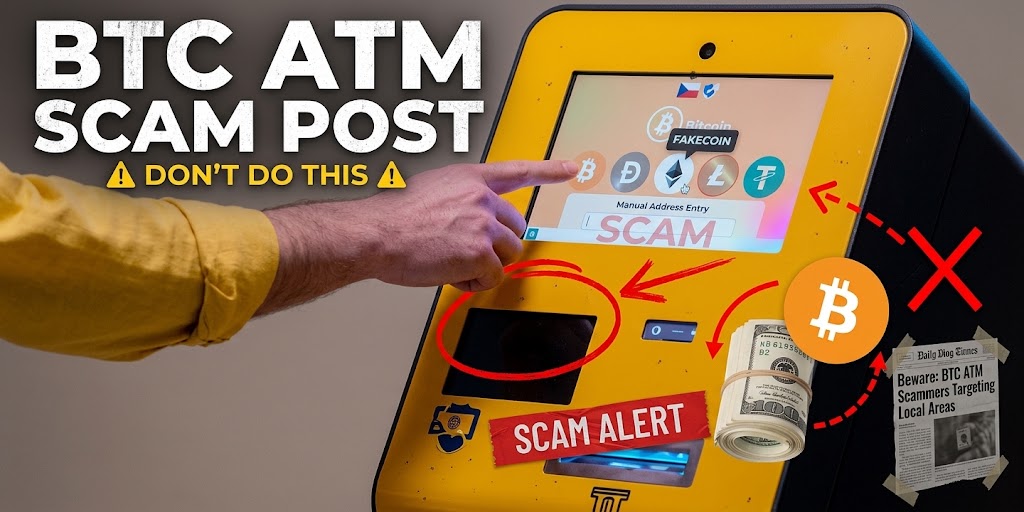
Common Types of Bitcoin ATM Scam
Scammers use different stories to persuade victims to send cryptocurrency. Recognising these patterns can help you identify a fraudulent request.
Government and Law Enforcement Impersonation
A caller may claim to represent the police, a court, a tax authority, or another government agency. They might accuse you of owing money or threaten arrest unless you pay immediately through a Bitcoin ATM.
Treat these demands with extreme caution. The FBI warns that legitimate government and law enforcement officials do not demand payment through cryptocurrency kiosks to collect taxes, fines, or bail.
End the conversation and contact the relevant organisation through its official website or a verified telephone number.
Bank and Technical Support Scams
A scammer may pretend to be a bank employee or technical support agent. They might claim that your account has been compromised and that you must move your money to protect it.
Instead, contact your bank directly using the number on your bank card or its official website. Do not follow payment instructions supplied by an unexpected caller.
Romance and Online Relationship Scams
Someone you meet online may develop a relationship with you before asking for financial help. They may claim to have an emergency, need money for travel, or want you to invest in cryptocurrency.
The person may then direct you to a Bitcoin ATM and provide a QR code for payment.
Never send cryptocurrency because someone you have only met online pressures you to do so. Verify their claims independently and discuss unusual requests with someone you trust.
Investment and Prize Scams
A fraudster may promise guaranteed profits, an exclusive investment opportunity, or a prize that requires an upfront payment.
They may direct you to deposit cash at a Bitcoin ATM to fund an account or pay a supposed release fee.
Legitimate investments carry risk, and guaranteed high returns are a major warning sign. Do not send cryptocurrency to unlock a prize or recover profits shown on an unfamiliar platform.
How to Recognise a Bitcoin ATM Scam
Before using a Bitcoin ATM, look for these warning signs:
- Unexpected payment demands: Someone contacts you and insists that you must pay immediately using cryptocurrency.
- Threats or intimidation: The caller threatens arrest, legal action, account closure, or financial penalties unless you follow their instructions.
- Unfamiliar QR codes: Someone sends you a code to scan without giving you a reliable way to verify the recipient.
- Instructions to keep secrets: The caller tells you not to speak to bank staff, family members, or the police.
- Guaranteed investment returns: An online contact promises unusually high profits with little or no risk.
- Pressure to stay on the phone: The person directs every step while you withdraw cash and operate the kiosk.
- Warnings you are told to ignore: A kiosk operator or bank employee raises concerns, but the caller insists that you continue.
One warning sign may be enough to justify stopping the transaction. Do not proceed until you have independently verified the request.
What to Do If You Have Been Scammed at a Bitcoin ATM
If you believe you have sent cryptocurrency to a scammer, act quickly. Although a completed transaction may not be reversible, preserving evidence and reporting the incident can help establish what happened.
1. Stop Sending Money
Do not make additional deposits, even if the scammer claims that another payment is needed to release your funds or complete a refund.
A demand for more money to recover an earlier payment may be part of the same scam.
2. Contact the Kiosk Operator
Find the kiosk operator’s official contact details and report the transaction. Provide the transaction receipt, date, amount, and location of the machine.
Ask whether the operator can review the transaction or take any action available under its procedures. A completed cryptocurrency transfer may not be recoverable, but prompt reporting is still worthwhile.
3. Contact Your Bank
If you withdrew cash from your bank account, inform the bank about the fraud. If you also made a card payment or another electronic transfer, ask whether any available dispute or fraud-reporting options apply.
Use contact details you obtain independently rather than numbers provided by the suspected scammer.
4. Preserve Transaction Evidence
Collect and save the following information, if available:
- The Bitcoin ATM receipt and kiosk location.
- The transaction ID, also called a transaction hash.
- The recipient’s cryptocurrency wallet address.
- The amount of cash deposited and the date and time.
- The QR code supplied by the scammer.
- Phone numbers, email addresses, messages, and account names used by the scammer.
- Bank withdrawal records and other payment confirmations.
Do not delete conversations or receipts that could help explain the incident. These records may assist the kiosk operator, financial institution, investigator, or relevant authorities.
5. Report the Scam
If you are in the United States, report the incident to the FBI Internet Crime Complaint Center and consider filing a report with the Federal Trade Commission. You can also contact local law enforcement.
If you live in another country, report the incident to the appropriate police or national cybercrime authority.
When filing a complaint, provide accurate details and keep a copy of your report or reference number.
Can Bitcoin Be Recovered After an ATM Scam?
Recovering Bitcoin sent through a scam-related ATM transaction depends on the circumstances. Relevant factors include where the cryptocurrency went, whether it reached a service that can identify or freeze an account, the available evidence, and the actions of relevant authorities or service providers.
Blockchain transactions can be examined to identify the movement of funds between addresses. A transaction ID and wallet address can help establish the transaction and support further analysis.
However, tracing cryptocurrency is not the same as recovering it. A blockchain investigation cannot automatically reverse a transaction, identify every wallet owner, or guarantee that funds will be returned.
Be cautious of anyone who guarantees recovery, claims special access to blockchain systems, or demands an unexplained upfront fee. The FBI has specifically warned about fraudulent cryptocurrency recovery services that target people who have already lost money.
For more information, read our guide to QR code scams, which explains how fraudulent payment codes can direct victims to scammer-controlled wallets.
How Cipher Tracing Can Help Review a Bitcoin ATM Scam
If you suspect that cryptocurrency was sent to a scammer, the available transaction records may help establish what happened.
Cipher Tracing provides information about its crypto recovery services. Depending on the case, an initial review may examine transaction IDs, wallet addresses, and other available evidence to assess possible next steps.
To request a review, visit our report a scam page.
When submitting a case, provide only the information requested through the appropriate secure process. Never share your wallet’s seed phrase, private keys, passwords, or authentication codes. These details are not required simply to examine a public blockchain transaction.
No service can guarantee that stolen cryptocurrency will be recovered. Any assessment should explain what the available evidence supports and what limitations remain.
How to Protect Yourself From Bitcoin ATM Scams
You can reduce your risk by following a few simple precautions:
- Never use a Bitcoin ATM because an unexpected caller tells you to.
- Verify claims about taxes, fines, account problems, and legal matters through official channels.
- Do not scan QR codes supplied by strangers to make a payment.
- Check the recipient address and amount before confirming a cryptocurrency transaction.
- Avoid investments that promise guaranteed profits or pressure you to deposit cash immediately.
- Ask a trusted person for advice if a payment request feels unusual.
- Keep your receipts and transaction records whenever you make a legitimate cryptocurrency purchase.
Most importantly, pause whenever someone tries to control how you use your money. A genuine request should withstand independent verification.
Final Thoughts
A Bitcoin ATM scam can turn cash into cryptocurrency that is sent directly to a fraudster. Scammers commonly rely on urgency, impersonation, misleading investment offers, and QR codes to persuade victims to complete the payment.
If you suspect a scam, stop sending money, preserve your transaction records, contact the kiosk operator and your bank where relevant, and report the incident to the appropriate authorities.
Blockchain analysis may help trace cryptocurrency transactions, but tracing does not guarantee recovery. Be wary of anyone who promises otherwise.
If you need to review a suspected cryptocurrency scam, visit Cipher Tracing’s crypto recovery services page to learn about the available process.
