
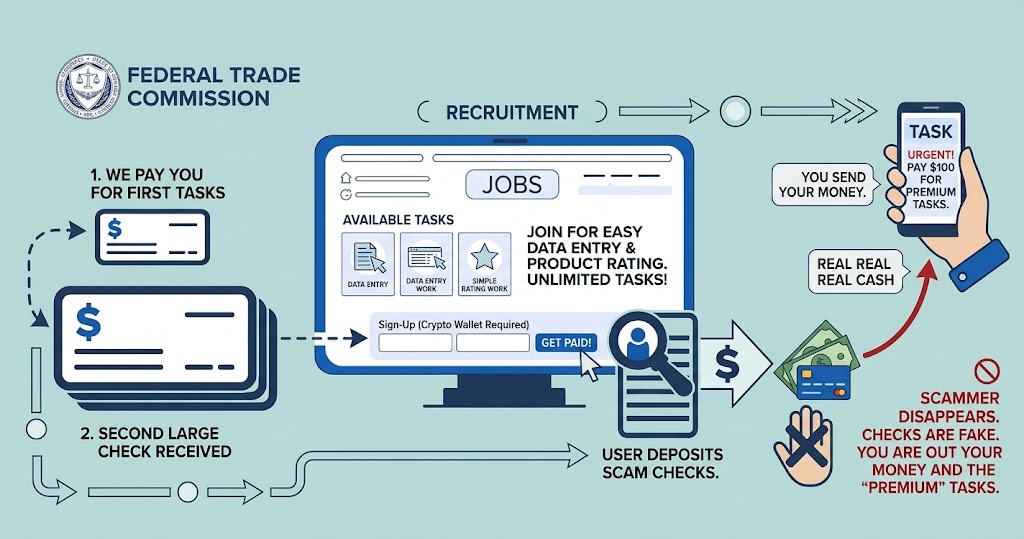
A task scam tricks people into believing they can earn money by completing simple online jobs. A scammer may offer commissions for liking videos, rating products, reviewing shops, or completing tasks through an app. At first, the platform may even show earnings or pay a small amount to make the opportunity appear legitimate.
However, the situation changes when you try to withdraw your money. The platform may demand a deposit, cryptocurrency payment, or additional fee before you can continue working or access your displayed balance.
The Federal Trade Commission (FTC) warns that these fake job opportunities can cause significant financial losses. In this guide, you will learn how task scams work, how to recognise warning signs, and what to do if you have already deposited money.
What Is a Task Scam?
A task scam is a type of online job fraud that promises earnings for completing simple digital activities. Scammers often use messaging apps, social media, and fake work platforms to recruit victims.
The tasks may involve product boosting, app optimisation, clicking buttons, liking videos, or rating products. You may see a dashboard displaying commissions and a growing account balance.
However, the displayed balance does not necessarily represent money you can withdraw. Once you become invested in the supposed job, the platform may require you to deposit your own funds to unlock more tasks or release your earnings.
According to the FTC’s December 2024 data spotlight, approximately 20,000 people reported task scams during the first half of 2024, compared with approximately 5,000 reports for all of 2023.
The FTC also reported that losses associated with job scams exceeded $220 million during the first half of 2024. Reported cryptocurrency losses within job scams reached approximately $41 million during that period.
These figures reflect reported incidents, not every scam that occurred. Nevertheless, they demonstrate why it is important to verify an online job before sending money.
How Does a Task Scam Work?
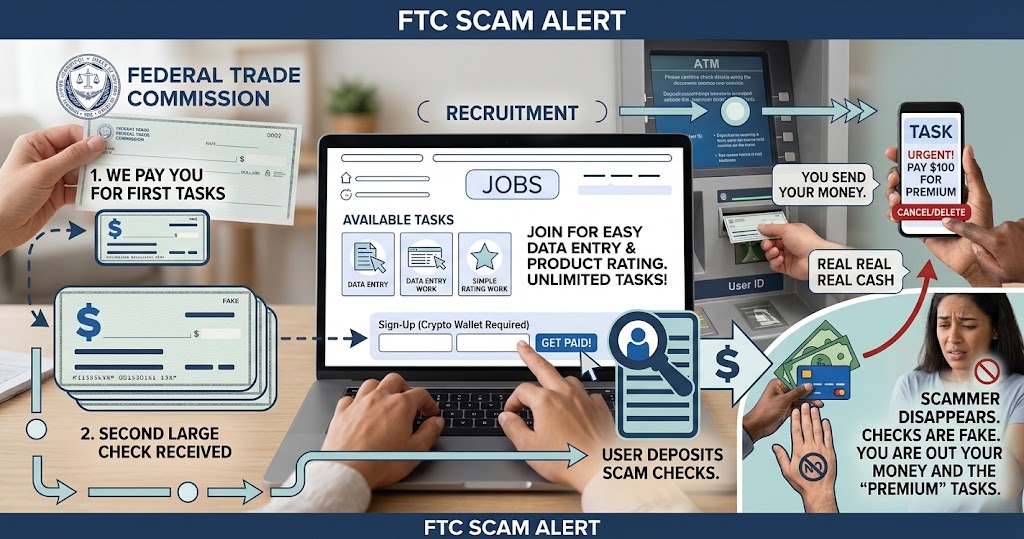
Task scams often follow a predictable pattern. Scammers start with an attractive job offer, build trust, and then introduce payments that victims must make to continue.
1. You Receive an Unexpected Job Offer
The scam may begin with a text message, WhatsApp message, Telegram invitation, or social media contact. Someone offers you an opportunity to earn money by completing simple online tasks.
You may not have applied for the job. The person might promise flexible hours, easy commissions, and quick payments.
Be cautious if an unknown recruiter offers unusually easy work without a proper interview or verifiable company information.
2. You Complete Simple Tasks
The recruiter directs you to a website, application, or online dashboard. You may be asked to like videos, rate products, or complete other repetitive activities.
The platform displays commissions for each completed task. In some cases, the scammers may even send a small initial payment to convince you that the opportunity is genuine.
However, an early payment does not prove that the job is legitimate. It may be part of a strategy to build trust before requesting a larger deposit.
3. The Platform Asks You to Deposit Money
After completing several tasks, you may discover that the next set is locked. The recruiter might claim that you need to recharge your account, complete a special task, or deposit cryptocurrency to continue.
The explanation may sound reasonable at first. However, a legitimate employer should not require you to pay money to receive your wages.
The demand to deposit money before you can withdraw your supposed earnings is one of the clearest warning signs of a task scam.
4. You Face More Payment Demands
Once you deposit money, the platform may introduce another obstacle. You might be asked to pay a tax, verification fee, account upgrade charge, or additional deposit.
Even if you make the requested payment, the platform may continue demanding more money.
Do not assume that another payment will release your balance. Stop sending money and preserve the available evidence.
Common Warning Signs of a Task Scam
Recognising the warning signs early can help you avoid losing money.
- Unsolicited job offers: Someone contacts you about work you never applied for.
- Unrealistic earnings: The recruiter promises high commissions for simple clicks or ratings.
- Unverified companies: You cannot independently confirm the employer’s identity or business operations.
- Fake earnings dashboards: An app displays profits but does not allow you to withdraw them freely.
- Mandatory deposits: You must use your own money to unlock tasks or receive payment.
- Cryptocurrency payment requests: The recruiter insists that you deposit Bitcoin or another cryptocurrency to continue working.
- Repeated withdrawal fees: The platform invents new charges whenever you try to access your balance.
- Pressure to act quickly: The recruiter claims that you will lose your earnings if you do not pay immediately.
One warning sign should prompt you to investigate further. If the platform requires you to pay to get paid, do not proceed.
What Should You Do If You Have Already Deposited Money?
If you suspect a task scam, stop making payments immediately. Although recovery is not guaranteed, taking prompt action can help preserve your options.
1. Stop Sending Money
Do not pay additional taxes, verification fees, or account upgrade charges to release your displayed balance.
Scammers may claim that you are only one payment away from receiving your earnings. However, further payments may simply increase your losses.
2. Contact Your Payment Provider
Contact the bank, card issuer, payment app, or cryptocurrency exchange you used to send the money.
Explain that you believe you were deceived by a fraudulent job platform. Ask whether the transaction can be cancelled, disputed, or reviewed.
Act as soon as possible because the available options depend on the payment method, transaction status, and provider’s procedures.
3. Preserve the Evidence
Save the information that could help explain the scam. For example, keep:
- Screenshots of the original job offer and conversations.
- The name of the platform and its website address.
- Images showing the tasks and displayed account balance.
- Records of every deposit and withdrawal request.
- Transaction IDs and cryptocurrency wallet addresses.
- Bank statements, payment receipts, and exchange confirmations.
- Phone numbers, usernames, email addresses, and group-chat details.
Keep the records together in a secure folder. Do not delete conversations simply because the recruiter has disappeared or blocked you.
4. Report the Task Scam
You can report suspected fraud to the Federal Trade Commission if you are in the United States.
You can also report internet-related crime through the FBI Internet Crime Complaint Center.
If you live elsewhere, contact the appropriate local police, consumer protection agency, or national cybercrime reporting authority.
Reporting creates a record of the incident, but it does not automatically result in a refund.
5. Protect Your Accounts and Personal Information
If you shared passwords, verification codes, or other sensitive information, secure the affected accounts immediately.
Change compromised passwords, enable multifactor authentication where available, and review your recent account activity. If you installed an unfamiliar application at the recruiter’s request, check your device for suspicious software.
Never give a recruiter or recovery agent remote access to your phone or computer without a legitimate, independently verified reason.
Can You Recover Money Lost to a Task Scam?
Recovering money from a task scam depends on several factors, including how the payment was made, where the funds went, and whether the receiving provider can take action.
For example, your bank or payment provider may have different procedures for an unauthorised transfer, a card payment, and a payment you personally approved after being deceived. Contact the relevant provider to understand which options apply.
Cryptocurrency payments can be more difficult to reverse. However, transaction records may still help establish where the funds were sent and whether further investigation is possible.
Be careful of anyone who guarantees a refund or promises to recover all your money for an upfront fee. Some scammers specifically target people who have already lost money in an earlier fraud.
A genuine assessment should explain what the available evidence can establish, what remains uncertain, and what limitations apply.
How Cryptocurrency Tracing May Help
Some task scams require victims to deposit Bitcoin or other cryptocurrencies into wallet addresses controlled by the scammers. In these cases, blockchain transaction records may provide useful evidence.
A transaction ID, wallet address, date, and amount can help establish the movement of funds between addresses. Depending on the available information, blockchain analysis may help identify transaction patterns and possible next steps.
However, tracing a transaction does not automatically identify the person controlling a wallet or guarantee that the funds can be recovered.
At Cipher Tracing, you can learn more about the available assessment process through our crypto recovery service page.
If you want to submit information about a suspected task scam, use our report a scam form or request a consultation.
Provide relevant records through the appropriate process. Never share your wallet’s seed phrase, private keys, passwords, or one-time authentication codes. These secrets are not required simply to examine a public blockchain transaction.
No service can guarantee that money lost to a task scam will be recovered.
How to Avoid Task Scams in the Future
You can reduce your risk by following a few simple precautions.
- Research the company independently before accepting an online job.
- Be suspicious of unsolicited offers promising easy money.
- Verify the recruiter through official company contact details.
- Never deposit your own money to receive wages or unlock job tasks.
- Avoid sending cryptocurrency to a wallet address supplied by an unverified recruiter.
- Do not trust an earnings dashboard without confirming that the money can actually be withdrawn.
- Discuss unusual job offers with someone you trust before making a payment.
- Preserve messages and payment records if you suspect fraud.
Remember that a professional-looking website, friendly recruiter, or small initial payment does not prove that an online job is genuine.
Final Thoughts
A task scam can begin with a simple offer to earn money by rating products, liking videos, or completing online activities. The fraud often becomes clear when the platform demands a deposit before allowing you to withdraw your supposed earnings.
If you encounter this situation, stop sending money, preserve your records, contact your payment provider, and report the incident to the appropriate authorities.
If cryptocurrency was involved, transaction records may support further analysis. However, tracing funds does not guarantee that they can be returned.
Always remember: a legitimate employer pays you for your work. You should not have to pay a recruiter to unlock your wages.
